B2B Ecommerce SEO: How to Improve Core Web Vitals, Schema Markup, and Crawl Efficiency for Higher Organic Rankings, Better Conversions, and Sustainable B2B Growth

B2B companies generate twice as much revenue from organic search as any other channel (BrightEdge), yet most B2B ecommerce sites still underinvest in the technical foundations that make organic growth possible. Site speed, crawl efficiency, schema markup, and mobile performance are not just checkboxes, they directly impact whether buyers find your products, how long they stay, and whether they convert.
At ROC Commerce, we treat technical SEO as a core platform capability, not an afterthought. Our .NET Core and React architecture delivers the fast load times, clean site structure, and built-in SEO tools that B2B distributors need to compete successfully for organic visibility in an increasingly crowded digital marketplace.
In this article, we’ll share the most effective technical SEO strategies for B2B ecommerce. Learn how to tackle the challenges of B2B SEO, use AI and personalization to improve search results, measure your SEO success, and follow practical steps for lasting growth with advanced technical SEO.
How B2B Buyer Journeys, Multiple Decision-Makers, and Long Sales Cycles Shape Your SEO Strategy
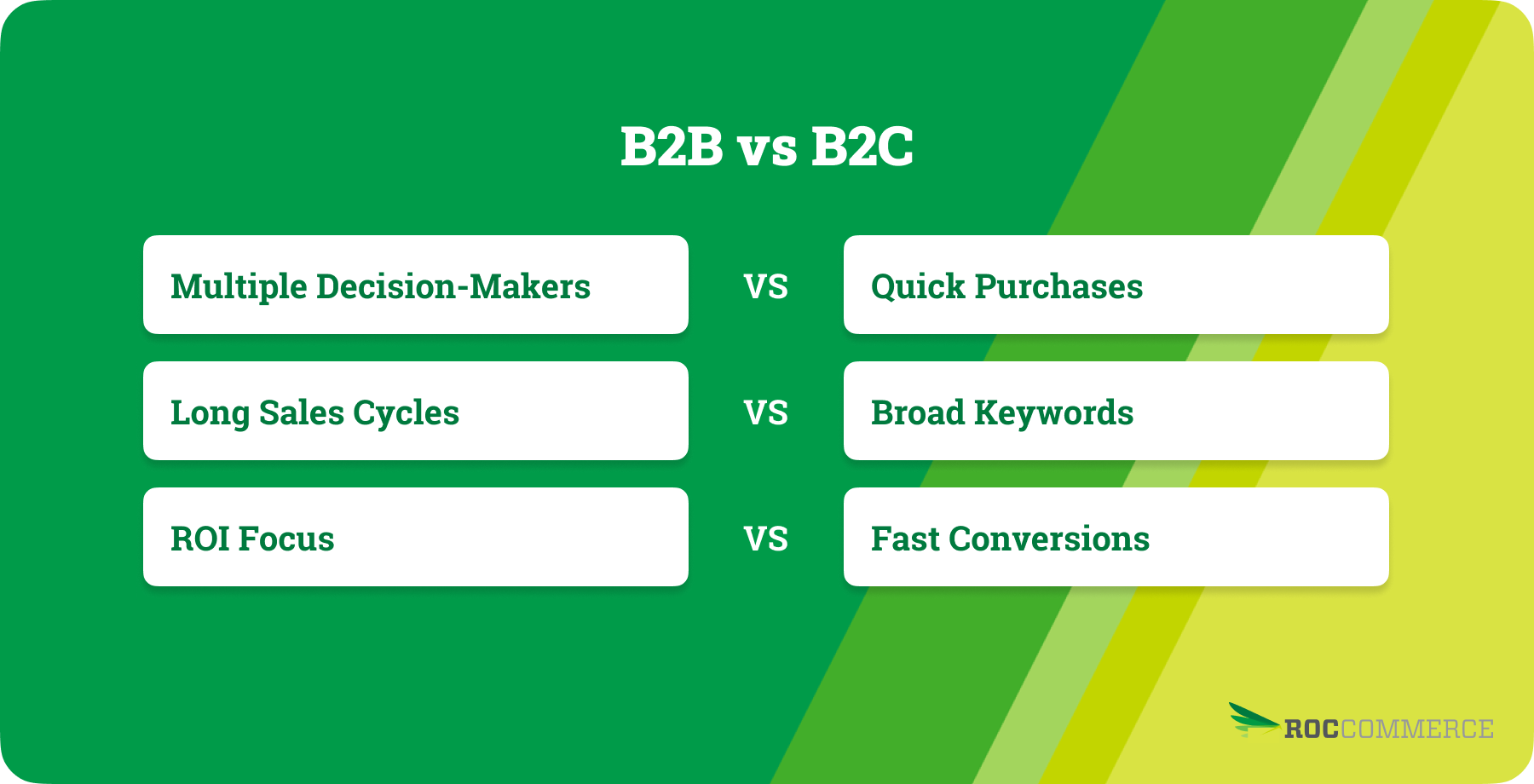
B2B buyer journeys are longer and more complex than B2C. They involve multiple decision-makers who focus on ROI, operational efficiency, and long-term value. Successful B2B SEO requires account-based targeting and tailored content that addresses the distinct needs of each stakeholder.
Unlike fast, emotion-driven B2C purchases, B2B decisions involve thorough research, collaboration, and risk evaluation. Therefore, B2B SEO must provide in-depth resources to support informed decisions and build enduring relationships
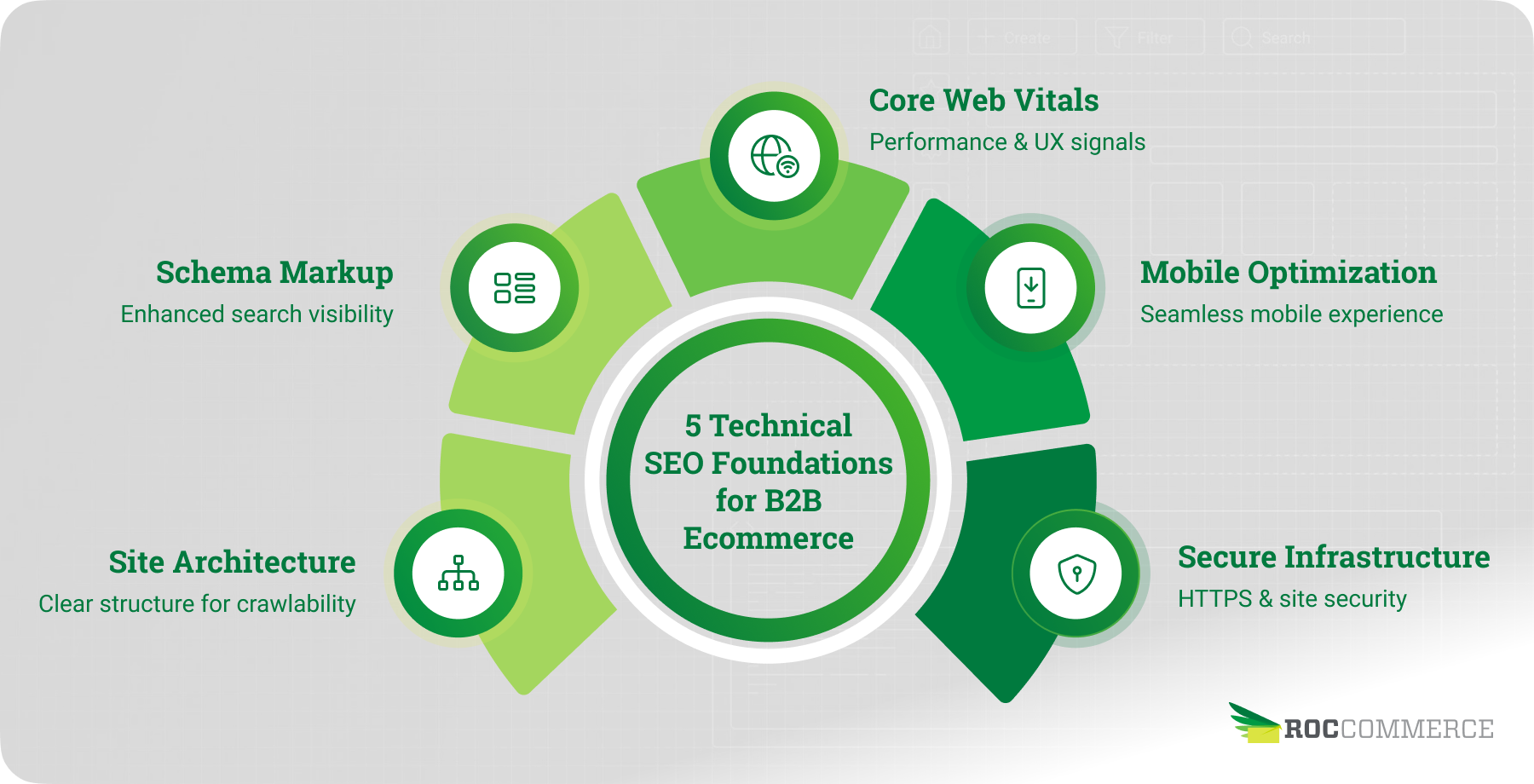
5 Technical SEO Optimizations That Improve B2B Ecommerce Rankings: Site Architecture, Schema Markup, Core Web Vitals, Mobile, and Secure Infrastructure
The most effective technical SEO tactics for B2B ecommerce include:
- Site architecture and crawl efficiency
- Schema markup and structured data
- Core Web Vitals (page speed and layout stability)
- Mobile-first design and responsive performance
- Secure infrastructure with HTTPS and PCI compliance
How Site Taxonomy, Internal Linking, and Category Structure Improve Crawl Efficiency and Indexing
Effective technical optimizations like clear site taxonomy, internal linking, and organized categories are necessary for B2B ecommerce SEO. A logical site structure helps search engines index your pages and makes important content easier to find. Internal links guide users and search bots to relevant pages, while organized categories help buyers quickly locate products. These strategies lead to better indexing, improved navigation, higher engagement, and more conversions.
How Schema Markup and Structured Data Increase B2B Ecommerce Click-Through Rates by Up to 80%
Schema markup and structured data help search engines interpret your site, leading to enhanced search results with ratings, pricing, and highlights. Effectively implementing schema markup and structured data increases visibility and click-through rates by 20–80% (Google Search Central).
See how ROC Commerce's built-in SEO tools can support you B2B ecommerce.
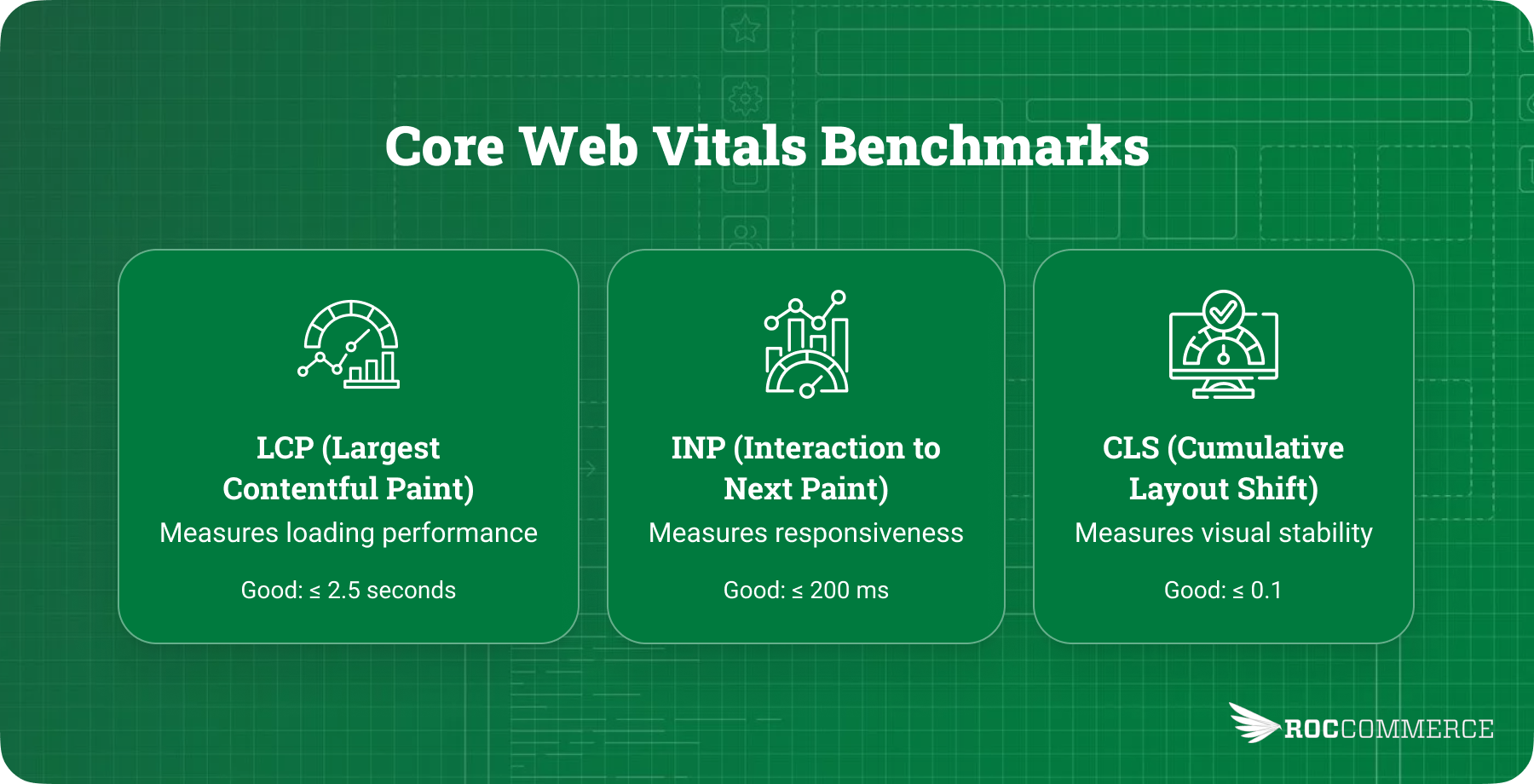
How Loading Speed, Layout Stability, and Responsiveness Affect B2B Ecommerce Rankings and Conversions
Improving core web vitals like loading speed, layout stability, and responsiveness is important for B2B ecommerce, as it reduces user frustration and boosts search rankings and conversions.
See how ROC Commerce's built-in performance optimizations deliver fast load times and strong Core Web Vitals scores.
Why Mobile-First Design Matters When 80% of B2B Buyers Research and Purchase on Mobile Devices
Mobile optimization is a must for B2B ecommerce, as 80% of B2B buyers use mobile at work, and over 60% say mobile played a significant role in a recent purchase (BCG via Ahrefs). Therefore, a fast, responsive site is key for user experience and search ranking under Google’s mobile-first indexing.
How HTTPS and PCI Compliance Protect Customer Data and Build Buyer Trust in B2B Ecommerce
Secure infrastructure is also a major part of B2B ecommerce. HTTPS has become a non-negotiable standard for all websites. It safeguards sensitive information during transactions and signals trustworthiness to today’s browsers and search engines. PCI compliance promotes payment security and demonstrates a commitment to protecting customer data, which is important for building lasting user confidence and credibility in your B2B ecommerce platform.
Discover how ROC Commerce’s B2B ecommerce platform empowers your business with impactful technical optimizations, such as secure infrastructure, core web vitals enhancements, and advanced schema markup, that drive real results. Request a personalized demo today to see these benefits in action!
How Algolia-Powered Search, Faceted Navigation, and AI Merchandising Rules Improve B2B SEO Performance
Using personalized search and advanced merchandising tools helps improve SEO by showing buyers the most relevant content and product suggestions based on their behavior. ROC Commerce works with Algolia, a leading search platform, and smart merchandising features to give users more tailored results and keep them engaged. Plus, since Google sends 345 times more website traffic than AI tools like ChatGPT, Gemini, and Perplexity combined (Ahrefs, 2025), making sure your on-site search and personalization are optimized for SEO can directly increase revenue. Standout features include faceted search, smart product recommendations, and merchandising rules that adjust to what buyers do on your site.
How to Measure B2B Ecommerce SEO ROI: Organic Traffic, Lead Quality, and Conversion Tracking
Smart SEO strategies help you cut acquisition costs, boost visitor actions, and increase client engagement. To measure success, monitor your website’s organic traffic, lead quality, and conversions.
With ROC Commerce, you get built-in analytics and reporting tools that make it easy to track results. These insights help you adjust your approach, prove the value of your SEO work, and show how it’s helping your business grow.
B2B Ecommerce SEO Platform Features: XML Sitemaps, Redirect Management, Schema Markup, and Crawl Controls
A strong SEO platform should offer:
- Editable page titles, meta descriptions, and URLs
- Fast, mobile-responsive design with strong Core Web Vitals
- Automatic XML sitemap generation
- Advanced schema markup support
- Built-in internal linking tools and redirect management
- Full crawl control (robots.txt, canonical tags)
ROC Commerce provides all these SEO features and more. Its API-first design allows flexible connections to other systems, built-in SEO tools make optimization simple, and AI-powered search and personalization offer relevant results. Plus, the platform is extremely fast, improving both user experience and search rankings.
These advantages strategically position your business, including those in wholesale, distribution, retail, and automotive industries, to excel in B2B ecommerce SEO. By prioritizing increased online visibility, enhancing the user experience, and supporting sustained, long-term growth, your B2B company is better equipped to beat the competition and secure a stronger foothold in the digital marketplace.
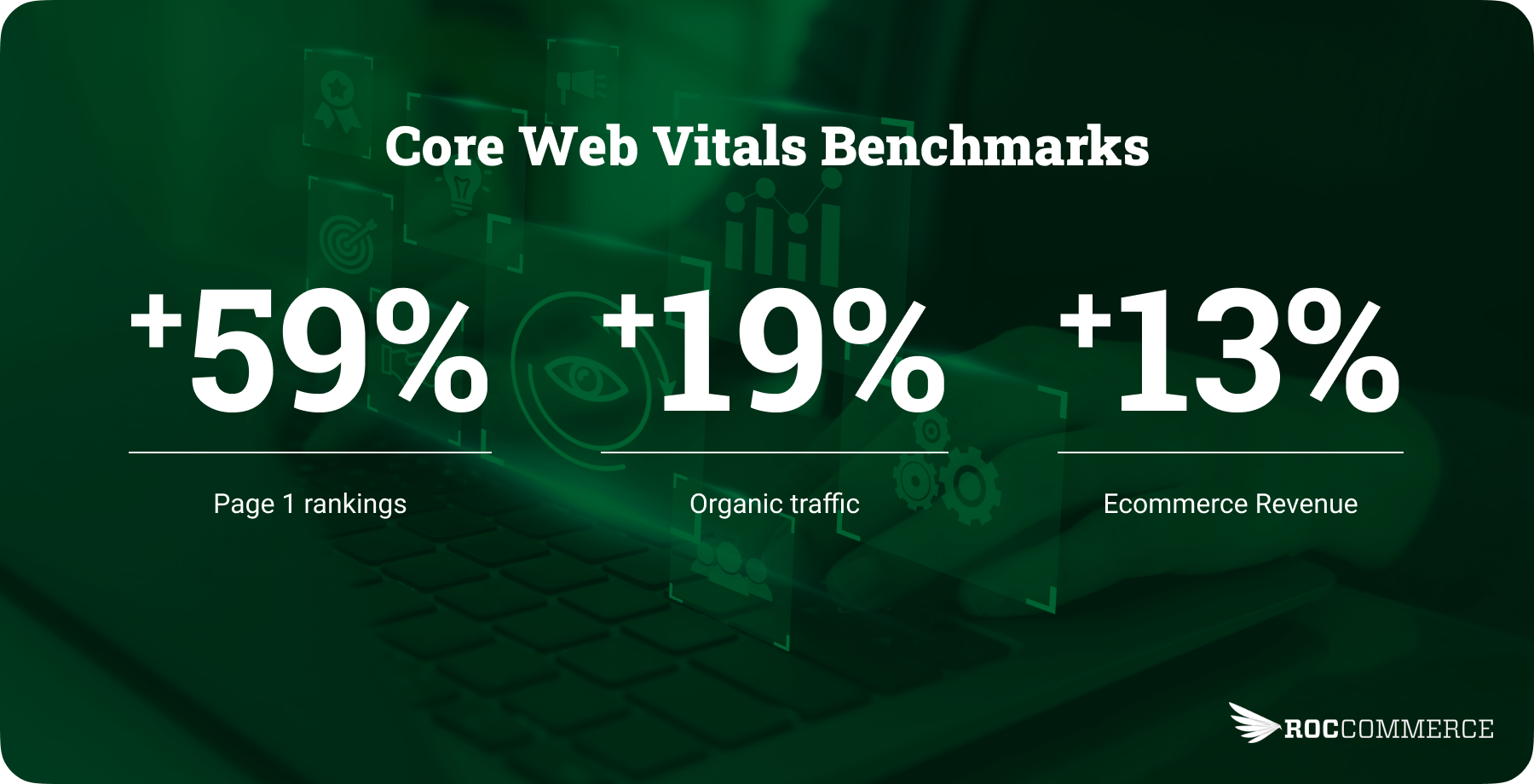
State Electric Case Study: 59% More Page 1 Rankings, 19% More Organic Traffic, and 13% Ecommerce Revenue Growth in One Year
Before launching their new website, State Electric worried that old technical issues would hurt their online success. Their previous site was hard for search engines to find, and important SEO elements like URLs, title tags, and meta descriptions were not optimized.
Americaneagle.com and ROC Commerce stepped in, performed a full audit, and created an SEO strategy tailored to State Electric’s needs. Together, they improved keyword use, optimized titles and headings, cleaned up URLs, ensured all important pages were in the sitemap, and added location schema to help local customers find the right store.
In one year, State Electric’s new site saw a 59% increase in first page keyword rankings, a 19% rise in organic search traffic, and 13% growth in ecommerce revenue. Improved search rankings made products easier to find, supporting continued online growth.
See What ROC Commerce Can Do for Your Business
B2B Ecommerce SEO: Frequently Asked Questions
What is a B2B SEO strategy?
A B2B SEO strategy optimizes your website to attract businesses by targeting niche keywords, addressing business challenges, and creating authoritative content that generates quality leads. B2B buyers consume 3-7 pieces of content before speaking with a salesperson, so an effective B2B SEO strategy ensures your brand appears at each research stage.
How is SEO for B2B different from B2C ecommerce SEO?
B2B SEO focuses on educating and appealing to business buyers with long sales cycles, using niche keywords and authoritative content for lead generation. In contrast, B2C SEO targets quick consumer purchases with broader keywords and transactional content for fast conversions.
What technical SEO optimizations have the biggest impact on B2B ecommerce sites?
Technical SEO optimizations to work on are building a robust site structure, using schema markup, ensuring core web vitals are optimized, designing for mobile users first, and maintaining a secure environment with HTTPS and PCI compliance.
Why does page speed matter for B2B ecommerce SEO?
Page speed directly impacts revenue: product pages with a 4-5 second LCP see 40-50% lower conversion rates than those loading in 2 seconds. Google uses Core Web Vitals as a ranking signal, so faster sites also earn better organic visibility.
How can AI personalization improve SEO performance?
AI personalization enhances SEO by showing users more relevant content and product offerings, boosting engagement and rankings, and automating tasks like keyword research and content optimization.
What platform features support better SEO for B2B ecommerce?
Key platform features for B2B SEO include editable meta titles, descriptions, and URLs; automatic XML sitemap generation; built-in schema markup support; redirect management; clean URL structures; mobile-responsive design; and fast page load speeds. ROC Commerce provides all these natively through its .NET Core and React architecture, plus Algolia-powered search that keeps visitors engaged and improves on-site conversion rates.
About Author